
Functional Flocking: Solving Problems in High-End Manufacturing
Published
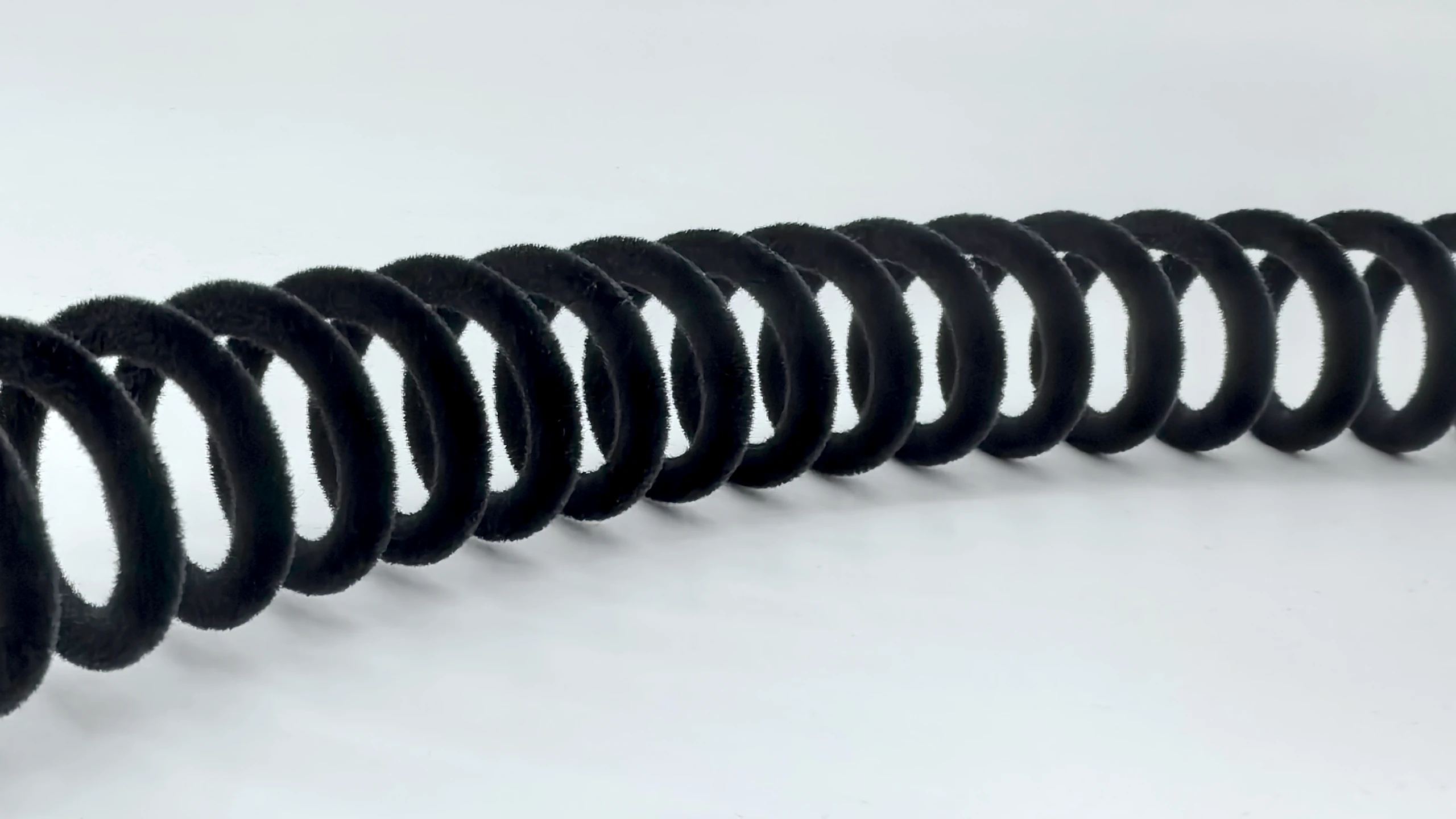
Many people still think of flocking as a decorative finish. In fact, functional flocking has become a key solution for real operating problems in high-end manufacturing. It does not change the geometry of a part, yet it changes how the contact surface behaves mechanically, optically and against dust.
1. Vibration and noise damping
A dense fiber layer forms a compliant interface at the contact surface, dissolving the vibration and rattle caused by hard metal-on-metal friction. It is the standard process behind automotive NVH refinement and quiet-running precision equipment: the layer turns rigid contact into elastic contact and absorbs impact energy inside the fibers instead of letting it reach the housing and amplify into noise.
2. Anti-glare: very low diffuse reflection
Glare control is the most overlooked benefit of flocking. A flocked surface delivers very low diffuse reflection and removes specular glare, which is why it is widely used in optical instruments, automotive displays and the cavities of security equipment. Images stay free of stray light and the surface no longer dazzles the eye.
3. Wear resistance and longer service life
An even flock layer takes the friction instead of the substrate, staying stable through tens of thousands of reciprocating cycles and markedly extending the life of springs, guide rails and other moving parts. The fibers act as a sacrificial layer, so wear happens in the flock rather than on the mating part, and clearances stay stable over time.
4. Sealing and dust control
Dense fibers fill the clearance between mating parts, blocking dust and debris and raising the overall protection level of the equipment. On slides, telescopic shafts and guide sleeves, the flock works as a flexible sealing lip: it keeps dust out without adding the drag of a rubber seal.
Special Flocking leads the drafting of the industry standard for flocked spring materials used in automotive tailgates and runs IATF16949 automotive-grade quality control across all lines. Every parameter, from fiber specification and adhesive system to electrostatic field, is calibrated per application, so customized flocking becomes a repeatable process rather than a one-off sample.